
UW-Platteville undergrads use summer stipends to research history, social media, ag, sports gambling
Civil War veterans. Sports betting. Bovine fertility.
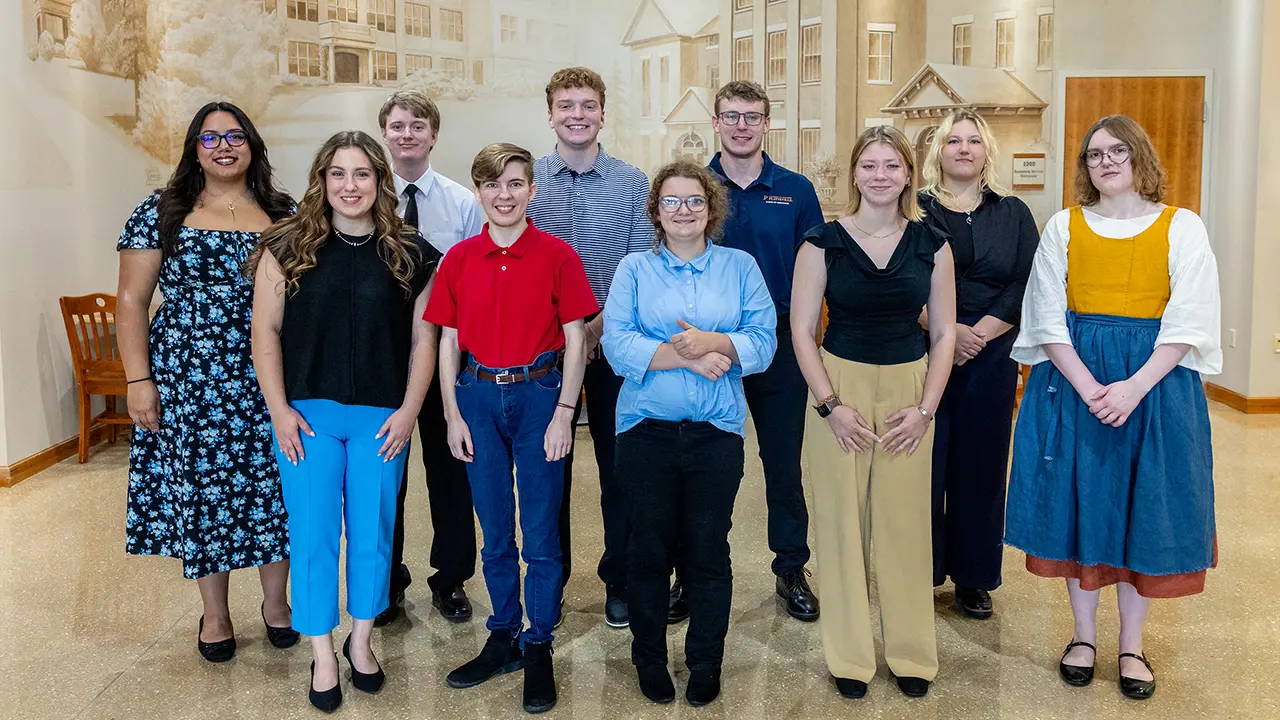
UW-Platteville's 2026 Summer Undergraduate Scholars walked family, friends and mentors through a breadth of research in capstone presentations Monday in the Markee Pioneer Student Center, showcasing how they spent the last eight weeks honing skills they'll need to excel in graduate school and beyond.
"In a time when it's easy to reach for feelings like despair and cynicism, these students fill me with nothing but hope and pride," Dr. Hannah Korell, an assistant English professor who doubles as UW-Platteville's undergraduate research coordinator, said as she introduced the scholars.
The Summer Undergraduate Scholars Program, or SUSP, is designed to help students develop the research and analytical skills they'll need as they continue their education beyond a four-year degree or enter the workplace. According to the Council on Undergraduate Research, allowing undergrads to dig deeply into their interest areas bolsters mentoring relationships with faculty, increases retention and graduation rates, leads to increased enrollment in graduate courses and develops critical thinking, creativity, problem-solving abilities and intellectual independence.
SUSP program leaders choose 10 students each year to spend June and July on campus researching their academic interests with the help of faculty and staff mentors. They also attend workshops focusing on preparing for graduate and professional schools as well as communicating advanced ideas. Each student gets a $5,000 stipend to boot.
Ashley Weis, a junior majoring in history, spent her summer polishing her work chronicling the life of Rebecca Peterman, one of as many as 1,000 transgender women believed to have fought in the Civil War. Peterman left her home in Ellenboro, Wisconsin, after her two stepbrothers were killed and enlisted in the Union Army, calling herself George. She became a drummer and served for two years. She may have been present at the Battle of Antietam. She was eventually discharged and returned home to Ellenboro, before disappearing from history.
"She's a minor curiosity of war," Weis said during her presentation, entitled "...looked better as a soldier than as a girl ..."
Weis said afterward that she hopes to one day work as a full-time researcher in a museum. She said that she hopes her SUSP experience will help earn her a graduate spot at UW-Eau Claire or Western University in Ontario.
"It's hands-on research," Weis said of SUSP. "(Participating in the program) shows you can do graduate-level work. Being funded is an incentive to stay in the area. This was a really great experience."
Meanwhile, Nathan Bentti, an incoming senior looking to become an FBI agent, offered a glimpse into the mind of a sports gambler, explaining that decisions to place a bet and how much to wager stem from a mix of personality traits, the type of bet and how the bet is presented.
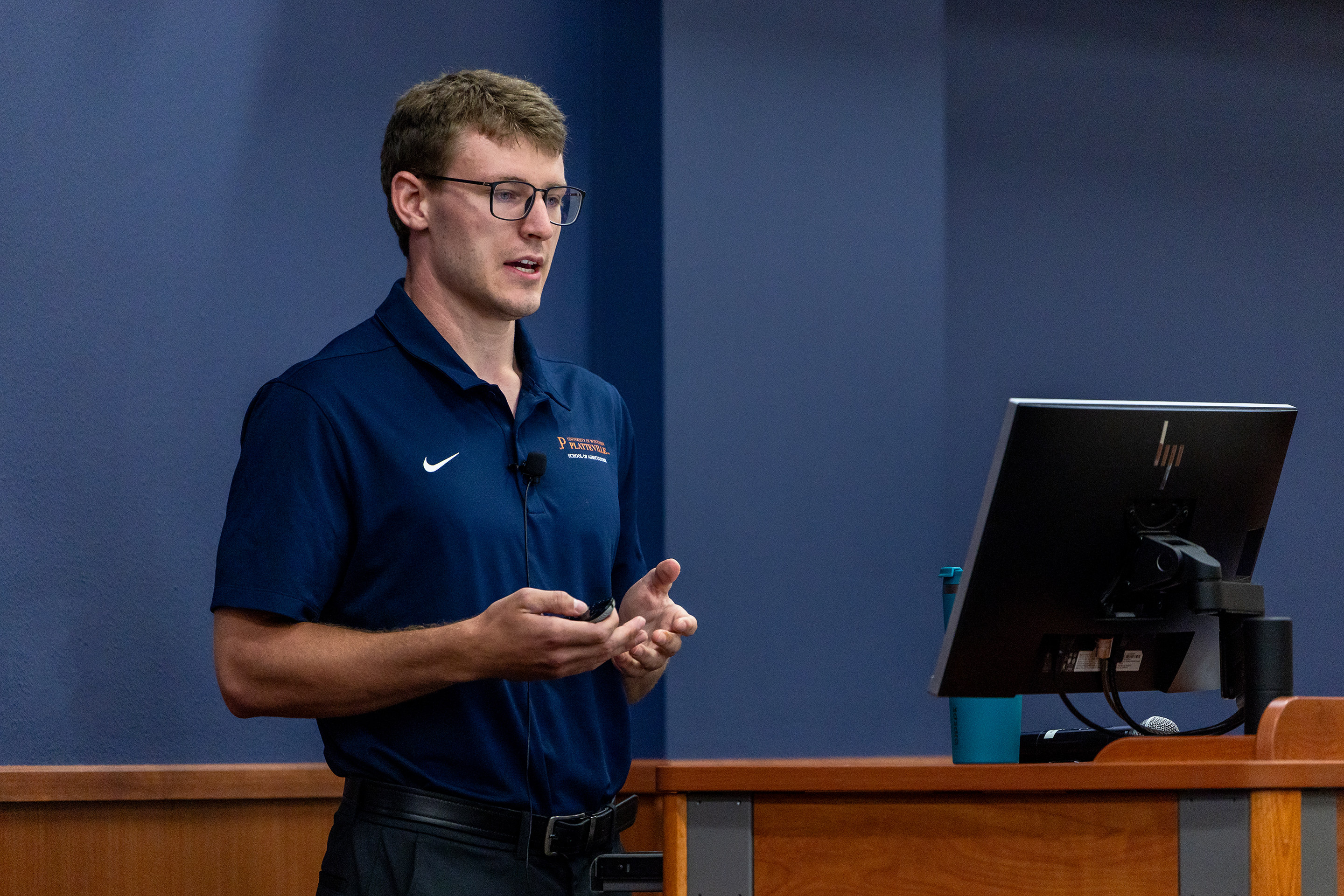
Ethan Bode, a junior animal science major set to attend veterinary school, went into a detailed discussion of how protein levels in a cow that has just given birth can indicate when the cow is ovulating again, right down to the size of the needle he used to draw blood samples from cows' tails at UW-Platteville's farm.
Liliana Varela, a psychology major entering her senior year, focused her presentation on how social media and artificial intelligence-generated graphics can skew people's perception of reality. She aptly titled her project: "How do we know what is true? The impact of photos and social media on the illusory truth effect."
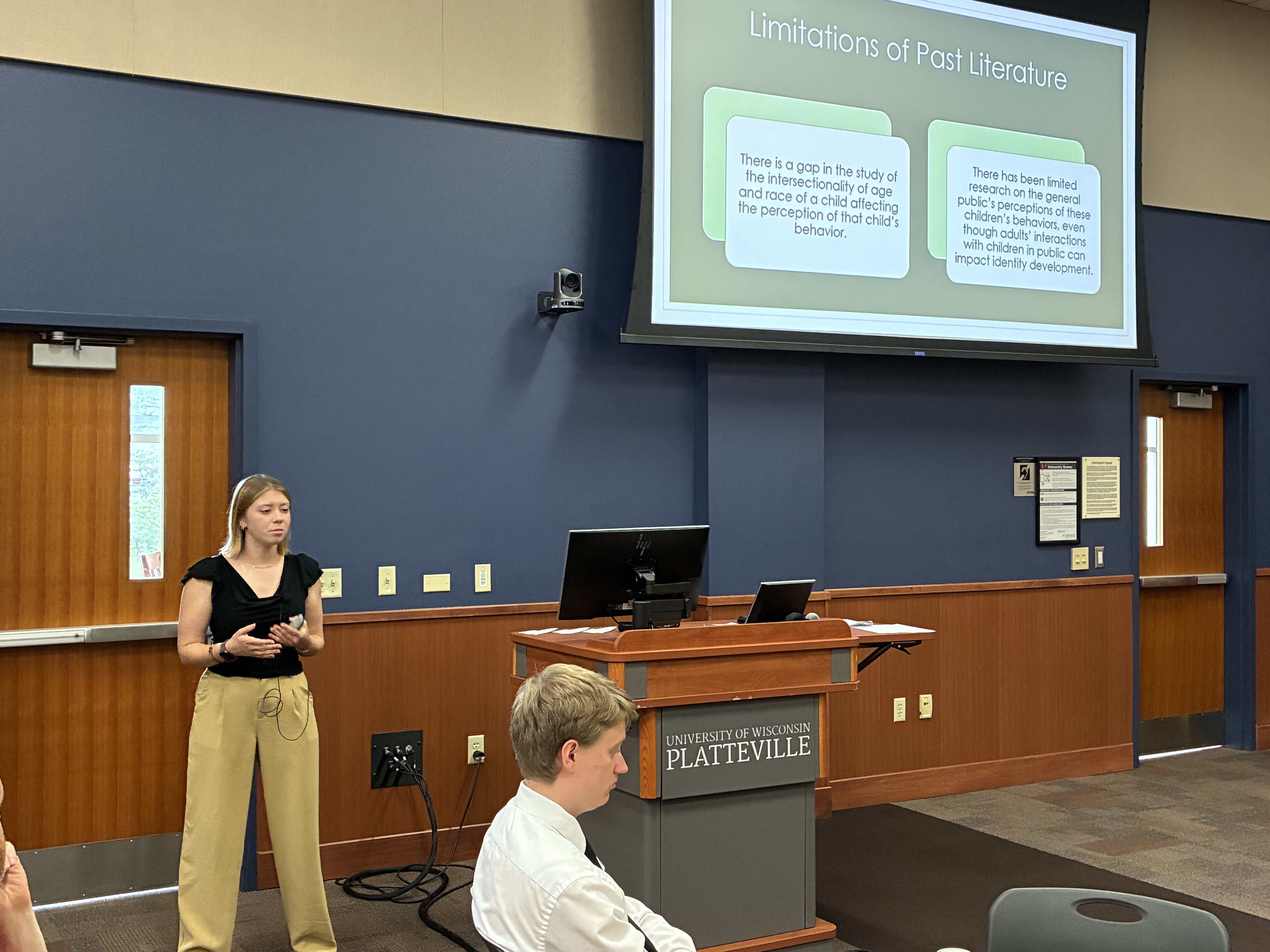
Kyli McCorkle, an incoming junior, discussed her efforts to research whether bystanders judge a Black or brown child's temper tantrum more harshly than a white child. Her survey was inconclusive, but the work still has value, she said.
"It gave me a head start on the skills I'll need for graduate school," McCorkle said after her presentation. "I learned that I love research. It allows me to answer my own questions."