
UW-Platteville Students Gain Firsthand Look at Business and Culture in China
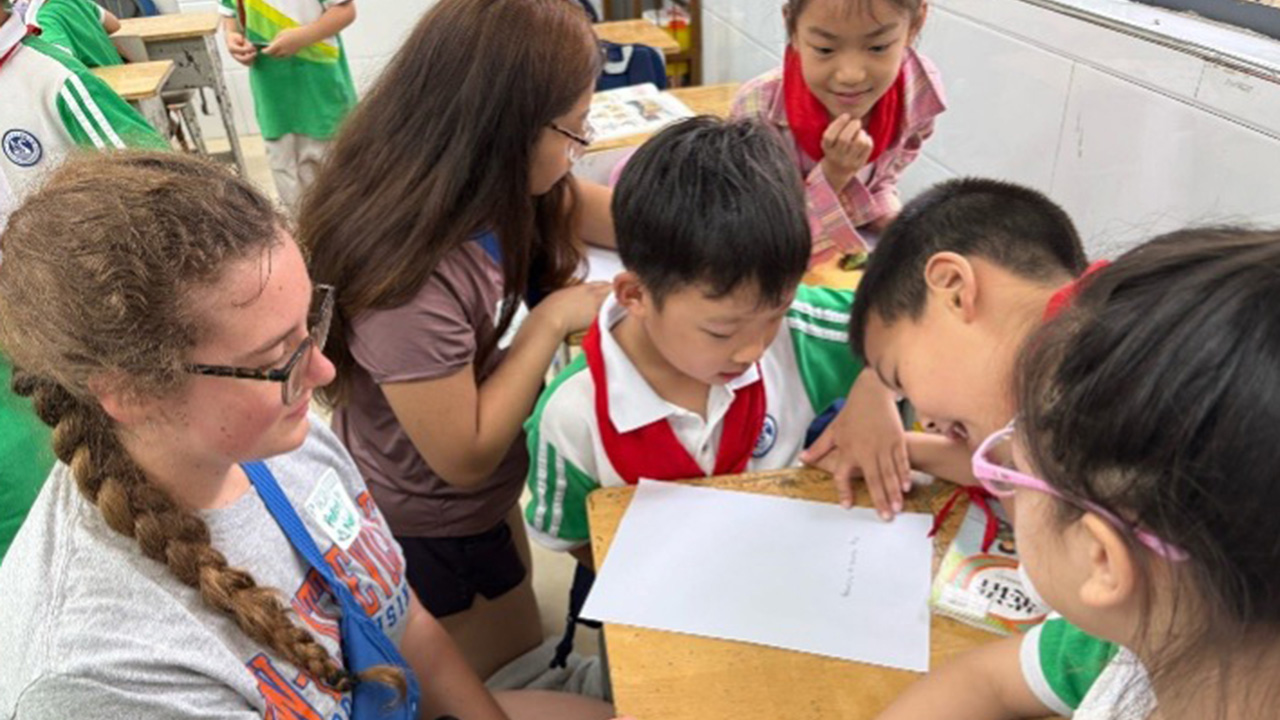
From innovation hubs and factory floors to historic landmarks and rural villages, University of Wisconsin-Platteville business students experienced China’s economy, culture and business practices firsthand this summer through a new two-week, noncredit study abroad program.
The 15-day experience, held June 15-29, brought UW-Platteville students and faculty to Beijing, Wuhan, Enshi and Shanghai through a partnership with South-Central Minzu University. The trip was part of the Young Envoys Scholarship program, a China Ministry of Education initiative designed to foster youth exchange between China and the United States and Europe.
The program was a joint effort between UW-Platteville’s Department of Humanities and School of Business. Dr. Yuanyuan Hu spearheaded the partnership and coordinated the trip, and Dr. Faye Peng, of the School of Business, served as co-leader.
"Seeing these concepts firsthand resonated much more than learning about them in a classroom,” said Aubrey Norgord, a sophomore double majoring in marketing and management with a minor in finance from Wausau, Wisconsin.
Students explored entrepreneurship, manufacturing and innovation through visits to the Pomegranate Seed Innovation and Entrepreneurship Space at South-Central Minzu University and IPASON, a PC manufacturing company, where they observed robotic inventory systems and production processes. The itinerary also included the Hubei Provincial Museum, Hubei Science and Technology Museum and rural revitalization efforts in Huoyan Village. “China’s digital economy is truly remarkable,” said Maria “Mafe” Lopez, a finance major from Galena, Illinois.
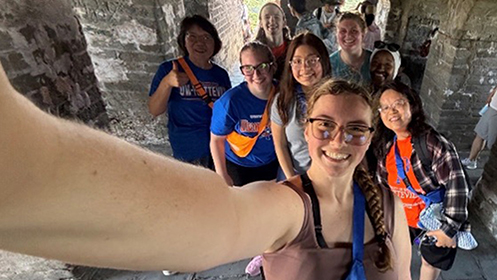
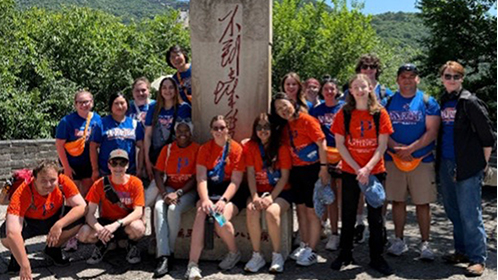
For Rokia Toure, a marketing major with a finance minor from Bamako, Mali, the company visits brought classroom lessons to life and underscored the value of building cross-cultural relationships in business. The students also experienced cultural landmarks across the four cities, including the Great Wall and Tiananmen Square in Beijing, the Yellow Crane Tower and Yangtze River waterfront in Wuhan, tea plantations and a traditional Tujia village in Enshi and Shanghai before departure.
As UW-Platteville’s first noncredit version of the program, the trip was designed to make international learning more accessible, with the program fee covering hotels, meals and in-country travel.
For the School of Business, the trip reflects a growing emphasis on applied learning that connects students with real-world organizations, hands-on experiences and international partnerships.