A Trip to the Archive: Southwest Wisconsin Room
By Michael Lambert
Science fiction authors have long dreamed of a world where time travel is possible. Back to the Future comes to mind for this author, but there are plenty of examples to choose from. However, one need not look to science fiction to transport themselves back in time, as I learned recently on a field trip to the Southwest Wisconsin Room on the UW-Platteville campus.
In many ways, walking into the museum-like interior of the archive is like taking a trip in a time machine. The recessed lighting is low and ambient. Graphic descriptions and sculptural artworks hang on the exhibit walls. There is an atmosphere and palpable quiet in the archive rooms with students quietly searching for their own hidden treasures in the collections. After I greeted the members of the Geode team, we settled in and started digging through the artifacts that the archivists had gathered for our visit.
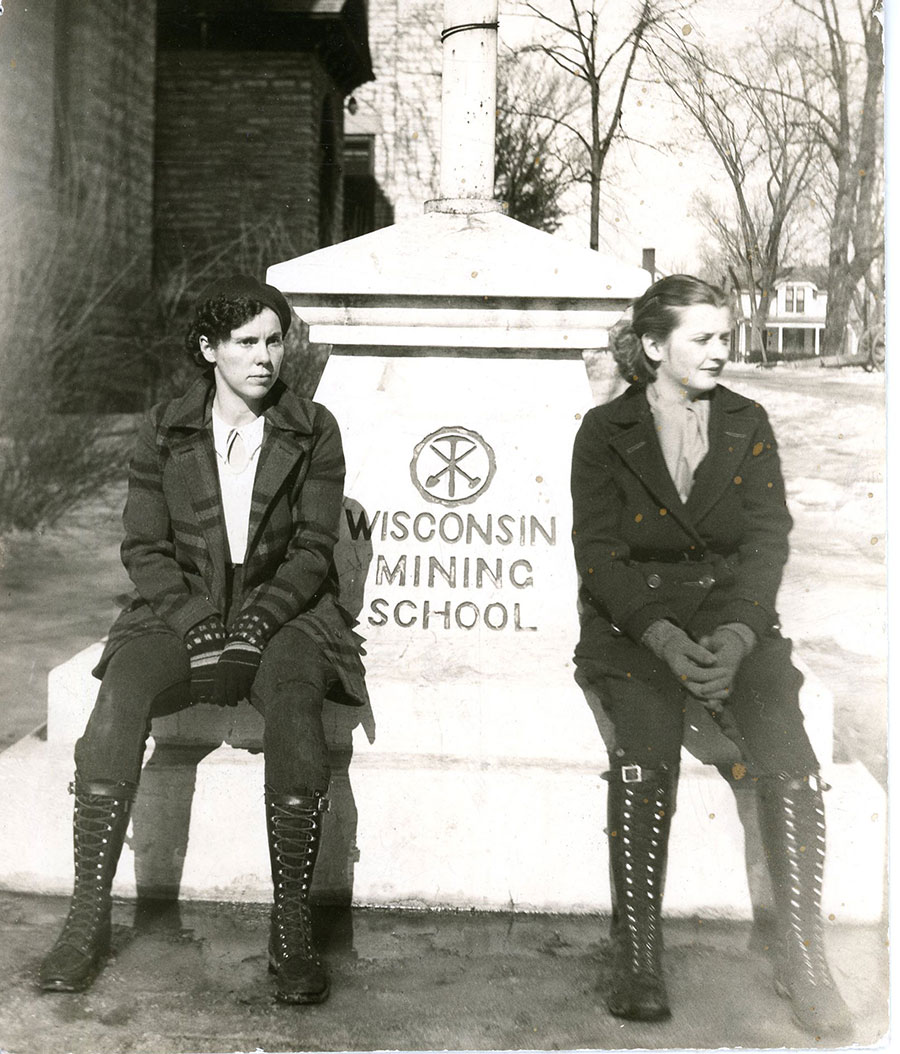
What first caught my eye was a box labeled, “Morrow.” Inside, aged reference books that bore the neat cursive handwriting of the famous Mining School Director, H.B. Morrow, sat in neat rows. I noticed another reference book in the cardboard box filled with notes from Morrow’s daughter, Nancy—the first female graduate of the Wisconsin Mining School.
The photo to the right famously depicts Fay Bible and Nancy Morrow at the base of the flagpole outside Rountree Hall. It was the site of the original Wisconsin Normal School—a precursor to UW-Platteville, of course, but also of the Mining School, itself. The flagpole still stands tall today, along with other historical markers, such as a plaque that describes some of this historical narrative.
Wisconsin’s first college devoted wholly to training teachers, the Platteville Normal School, opened here on October 9, 1866, in Rountree Hall, which since 1853 had housed its predecessor, the Platteville Academy. The Academy (1842-1866) had functioned largely as a private high school, preparing students for college and teaching. When in 1865, the legislature authorized the state to establish “normal” schools for the training of teachers, many cities offered proposals. Platteville Academy’s trustees provided Rountree Hall, the community raised money, and Platteville Normal School opened with a 5-member faculty and 60 students. Two years later, General Ulysses S. Grant participated in the dedication of a new wing. Rountree Hall became the home of the Wisconsin Mining Trade School in 1907, and the Normal School moved to an adjacent site. In 1925, normal schools were converted to state teachers colleges and empowered to grant bachelor’s degrees. In 1959, the Wisconsin State College-Platteville and the Wisconsin Institute of Technology merged and in 1971 became the University of Wisconsin-Platteville.
If you visit Rountree, your eye might wander to the nearby fenced-off mining implement that sits in the east lawn. What first strikes the eye as a war machine was instead used to chisel-out and unearth veins of lead within the rock that still lies beneath our feet.
In the distance, the Mining and Rollo Jamison Museums sit atop a hill that overlooks Main Street. The tunnels underneath the old buildings and railroad were once lively and active lead mines that brought early settlers to this part of the state. Even the current mascot, Pioneer Pete, serves as a reference to this part of the past.
According to Professor David Krugler, looking back at the historical period from 100 years ago suggests similarities to our own current affairs. “The 1920s might seem like ancient history, but the decade resembles the 2020s in remarkable ways.” He emphasized that many of the same forces that shape modern times may be found in the historical record. “Culture wars, women’s rights, economic growth dependent on consumer spending, and heated debates on immigration and the United States role in the world.” The roaring 1920s, The Great Gatsby, and the subsequent Great Depression all come to mind.
Another hidden gem from the archive is a book published in 1983 by Thomas Lundeen. The book titled Jubilee! A History of the College of Engineering contains many primary source examples that help to illuminate the life and times of the university in the 1920s. In addition to field notes and background information that helped tell the story of the construction of the big “M” elsewhere in this issue, the book also contains the first-hand account of how the Miner’s Ball came into being.
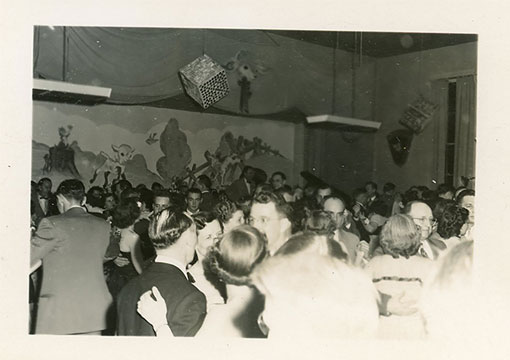
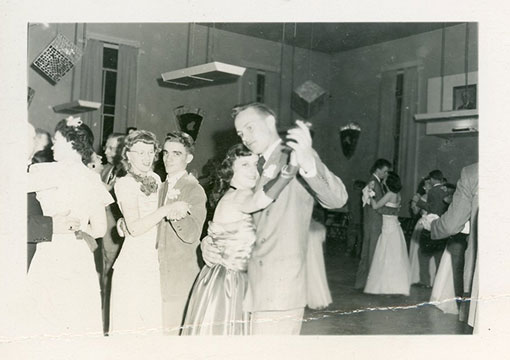
According to Lundeen, “from the beginning of the Mining School, dances were an important part of extra-curricular social life.” He then points to an account written by Harold Robbins.
In 1926 some of the students wanted to hold a dance at the school. Morrow decided that it would not be proper to have it there because it would not be a school function. The students then decided to hold the dance at a downtown hall but Morrow did not like this either so the dance was called off. The students were upset about this. Morrow sent word that he wanted to see me in his office. What he wanted to ask me was why the students were so upset. We talked for about an hour. I explained my viewpoint that we needed some social functions at the school. In the end he said, “Okay. But let’s all talk it over and, whatever we do, let’s make it the best.” I replied that what we needed most was good music and decorations. The next day he called in the leaders who wanted the dance and asked that I come along. As a result of this meeting, it was decided that at least two dances per year would be given at the school as school functions and that only name bands would play. At that time name bands would play in Chicago and then go on tours, playing one night stands within driving distances. That worked out fine because Platteville was close by.
I was in charge of the decorations for the first dance. We got the loan of a very large crystal ball from a hall and, as it was springtime, we went out near the Platteville mound and cut down six wild crabapple trees in full bloom. That evening during the dance, the band leader came to me and said he had been playing for years at many universities and that this evening was the best of all. Everybody was happy and, for a number of years, the school had these dances. It was Morrow who insisted on the best.
Lundeen continues his narrative following this account and lists the names of some of the bands that Morrow and company were able to draw to campus. Lawrence Welk, Al Katz, Henry Busse, and others are included—a truly impressive list, and a feat that still echoes today with the Miner’s Ball traditionally held each year.
Looking back at the historical record often means black and white photos, dusty archival artifacts, and digging through seemingly endless newspaper articles and records. One thing that comes to mind after doing this research on our institution and some of the people who helped formed the foundation of it is that their lives were just as vibrant and alive as our own. Trying to imagine life back then in full color takes time and effort, but with it comes an appreciation for the lives of those that came before us, and their efforts in helping to build the things that we still enjoy and experience today.