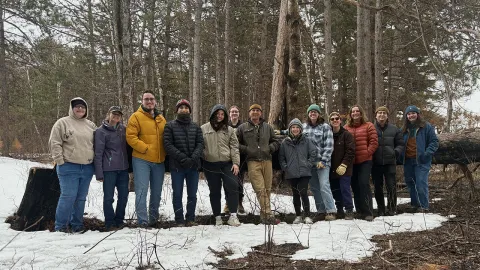
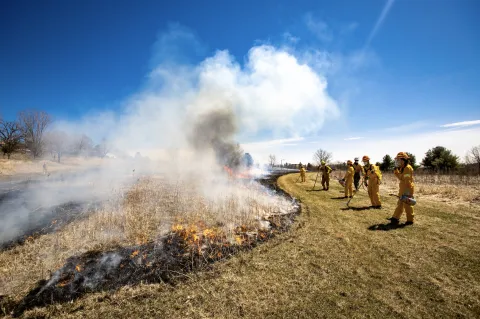
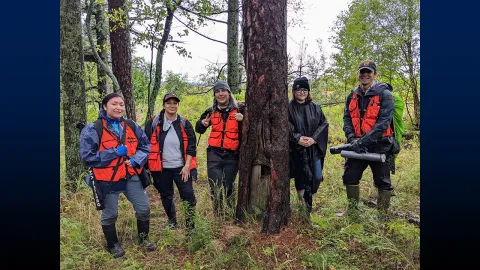
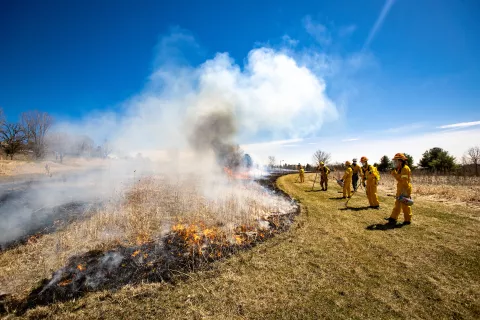
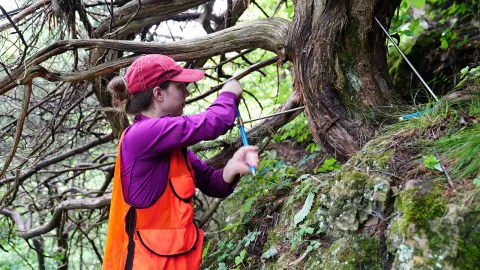
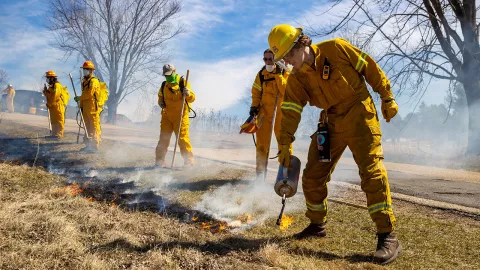
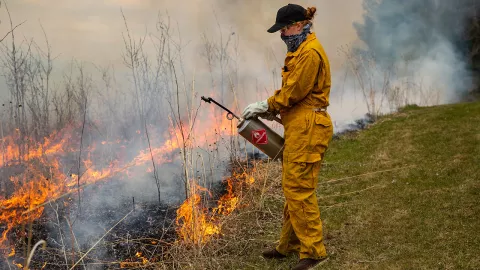
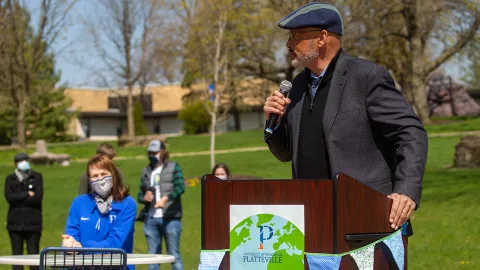
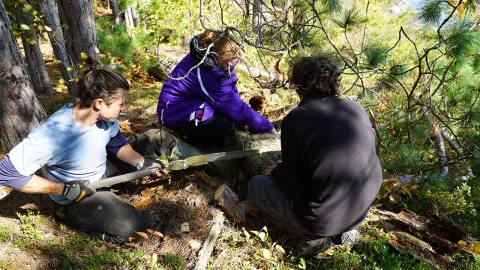
Students enrolled in Dr. Evan Larson’s Fire Ecology course in the Department of Environmental Sciences and Society participated in a four-day field trip, contributing to projects aimed at reintroducing low-intensity fire to the landscapes of Wisconsin and the Great Lakes Region. Students visited the University of Minnesota Cloquet Forestry Center where they piled and burned woody fuels along a burn break. This work helps reduce the intensity of future prescribed burns to enhance the benefits to the forest ecosystem and improve the safety of the burn crew.
The University of Wisconsin-Platteville will host a one-day prescribed fire training on Friday, February 27, providing a foundational knowledge and practical preparation for supporting prescribed burns on campus and beyond.
Led by experts from the Wisconsin Prescribed Fire Council, the training will introduce participants to the principles of fire ecology, prescribed fire planning and safe implementation practices. The course is designed to equip attendees with the skills and understanding necessary to volunteer on a burn crew and to thoughtfully consider the use of prescribed fire as a land stewardship tool.
Participants who complete the full-day training will be eligible to assist with UW-Platteville’s prescribed burns this spring. They will also have the opportunity to join a volunteer contact list and be notified when burns are conducted.
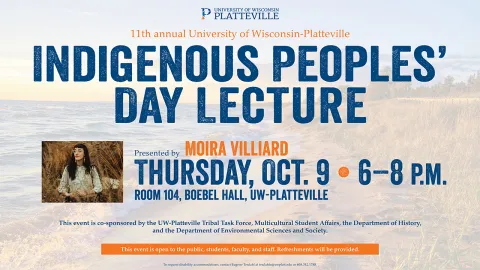
Thursday, October 9 | 6–8 p.m. | Boebel Hall Room 104
Enjoy an evening with Moira Villiard, a multidisciplinary artist whose vibrant work uplifts underrepresented stories and fosters healing through public art across the Great Lakes. She grew up on the Fond du Lac Reservation and is a Fond du Lac direct descendant. Villiard blends murals, animation, illustration and community exhibitions and engagement to explore the intersections of history, identity and resilience.
“We are very excited to welcome Moira (Miri) Villiard as the eleventh annual UW-Platteville Indigenous Peoples’ Day Lecturer,” said Dr. Eugene Tesdahl, associate professor of history at UW-Platteville. “Villiard is the first artist to give this prestigious lecture at our institution; she will illustrate connections between Native American culture and art in this public event.”
Dr. Evan Larson, professor of environmental sciences and society at the University of Wisconsin-Platteville, is the lead author of a significant publication in the “Proceedings of the National Academy of Sciences,” one of the world’s leading scientific journals. His Indigenous and non-Indigenous co-authors (Nisogaabokwe Melonee Montano, Emily Lockling, Ashla Ojibway, Mocha Reynolds, Valerie Ross Zhaawendaagozikwe, Lane Johnson, Kurt Kipfmueller, Michael J. Dockry, Vern Northrup, Jeff Savage and Robin Wall Kimmerer) include undergraduate students from Fond du Lac Tribal and Community College, elders from the Fond du Lac Band of Lake Superior Ojibwe, tribal leaders from Red Cliff, and two members of the Citizen Potawatomi Band, including the preeminent author Robin Kimmerer.
Every year during Convocation, the University of Wisconsin-Platteville highlights the excellence of its faculty and staff through UW-Platteville and Universities of Wisconsin awards. These honors recognize those who exemplify dedication in their work. This year, we’re going beyond titles and achievements, bringing forward the personal stories of those who shape our campus and community.
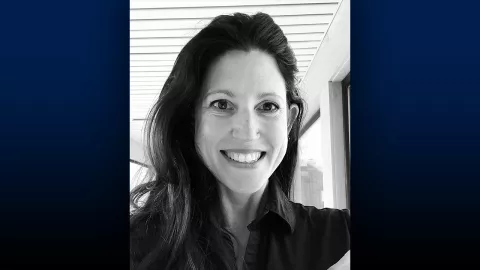
The University of Wisconsin-Platteville will recognize Dr. Dong Isbister as the recipient of the 2025 Dr. Carol Sue Butts Award. The honor recognizes employees and students who make a difference in the lives of women in the campus community.
For those who don’t know, what is your official title and what kind of work do you do for UW-Platteville and the Department of Social Services?
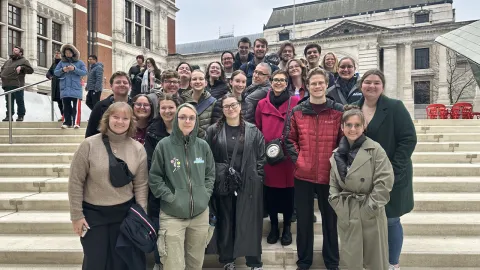
This January, three groups of UW-Platteville College of Liberal Arts and Education students and faculty engaged in once-in-a-lifetime study abroad experiences in England, Italy and the Galápagos Islands during the Winterim term.
Theatre faculty Dr. Ann Farrelly, Jeffrey Strange and Sarah Strange led English Period Styles for the Theatre and British Theatre for 22 students in the United Kingdom. This is the fifth time this study abroad opportunity has been offered by the university. Sarah Strange remarked that for an international trip focused on theater, London was an obvious destination as well as an accessible one for first-time international travelers.
“London is a fantastic hub for theatre that is extremely well done and affordable,” she said. “For some of our students, they don't get the chance to be exposed to such high-quality performance outside of touring productions.”
Dr. Lynnette Dornak, associate professor of environmental science and society at the University of Wisconsin-Platteville, has been selected for the 2024-2025 Wisconsin Teaching Fellows and Scholars Program. She is one of two UW-Platteville faculty members selected for the Universities of Wisconsin program this year.
Dornak, who started her teaching journey as a graduate teaching assistant at Stephen F. Austin State University in 2000, has taught a variety of biology, natural science and geospatial courses. She has been with UW-Platteville since the fall of 2014.
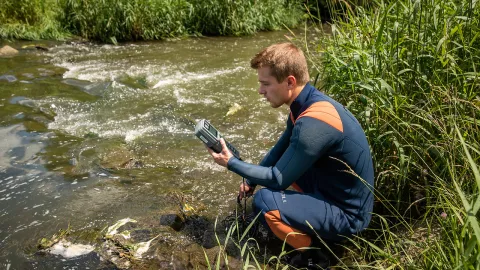
Biology students at the University of Wisconsin-Platteville stepped into chest waders and took to the water to conduct fish sampling. Fish sampling provides a straightforward method to assess fish populations or communities, particularly in their habitats. It’s part of a broader collaboration with Trout Unlimited, a national nonprofit organization that focuses on conserving, protecting and restoring America’s coldwater fisheries and watersheds.
The research is led by UW-Platteville Biology Professor Dr. Kristopher Wright, who has been conducting long-term monitoring at 42 sites for the local chapter of Trout Unlimited. He describes streams as the barometer of the local environment, calling them the lifeblood of the surrounding ecosystem.
Terrence Ingram’s lifelong passion for nature propelled him through a celebrated career in conservationism that spanned more than 60 years. Now, his recent estate gift to the UW-Platteville Foundation will ensure opportunities for the next generation of students to continue his work in this field.
Ingram graduated from UW-Platteville in 1961. While his degrees were in physics and mathematics, he never let go of his passion for environmentalism, particularly studying birds. Ingram says, as a high schooler, he spent every Sunday afternoon in the timber looking for birds.
“I took a course in ornithology at Platteville, even though the professor didn’t think I should because I didn’t have a biology background,” said Ingram. “But, by the time the class was over, I was taking half the class on fieldtrips, while the professor took the other half.”
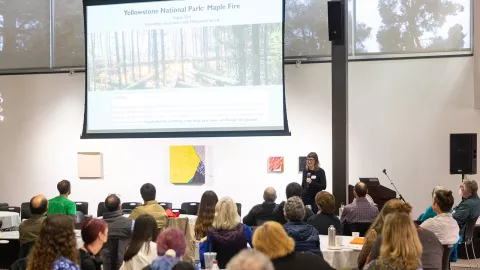
The University of Wisconsin-Platteville recently hosted the 2024 Prescribed Fire Conference, welcoming over 200 people from across the state who all share an interest in the vital use of prescribed fire to preserve the rich, biodiverse landscape of Wisconsin and the Driftless region. Participants included private landowners; students; and members of academia, state agencies and nonprofits. The conference included presentations about a diverse range of topics related to fire, from the acoustics of wildfire to the importance of Indigenous cultural burning practices to new advances in monitoring fire activity by the Wisconsin DNR.
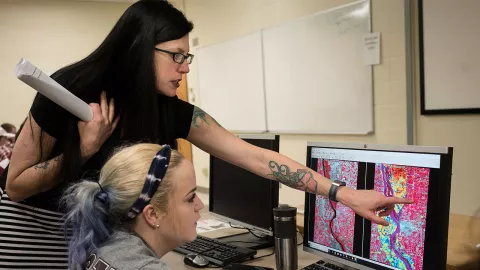
University of Wisconsin-Platteville's Department of Environmental Sciences and Society will host the 2024 Wisconsin Prescribed Fire Conference at UW-Platteville on February 2-3.
This event brings together fire practitioners, students, researchers and private landowners to exchange ideas and expertise around the safe and vital use of prescribed fire to promote beautiful, diverse and resilient landscapes across Wisconsin and the Driftless Region. This conference is an opportunity for landowners or anyone considering a future job working in fire and/or land management to learn and network. A full conference agenda is available here: https://prescribedfire.org/registration-now-open-2024-wpfc-conference/
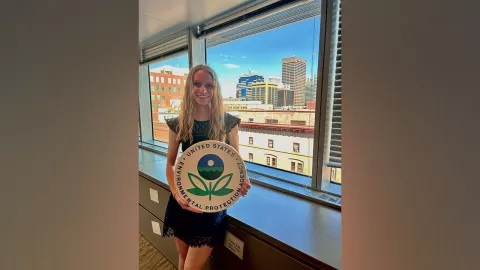
For Lindsey Barnes, working at the Environmental Protection Agency was always a “dream job.” With a passion for the environment and a desire to make a meaningful impact, the University of Wisconsin-Platteville junior from Cedar Rapids, Iowa set her sights on that future goal – never imagining she would achieve it two years before graduating college.
“Working for the EPA is something I always dreamed of,” said Barnes, a double major in environmental science and conservation and sustainability and renewable energy systems. “But I always thought, if I were ever able to accomplish it, it would be farther down my career path. So, when I saw a position posted for an intern, I jumped right on it.”
The ubiquitous eastern redcedar tree – a native species but one that can encroach on the region’s pastures and prairies – may be seen as a nuisance to some, but actually has a very important story to tell about the region’s climate history. Researchers from the University of Wisconsin-Platteville are calling on the help of residents of the Driftless Area to identify redcedar tree samples to be included in National Science Foundation research that is studying the long-term history of drought in the region.
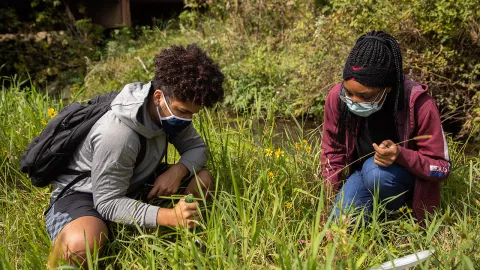
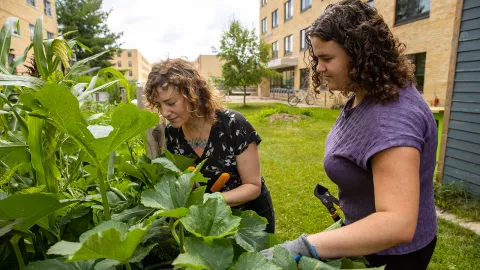
Ellie Zimmermann, a senior at the University of Wisconsin-Platteville from Lakeville, Minnesota, is spending the summer conducting research to explore the connections between community garden space and the perceptions of health and well-being and food security in the local community.
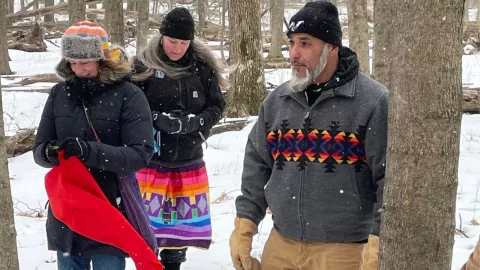
For the past several years, University of Wisconsin-Platteville students and faculty in the Environmental Sciences and Society and History programs have helped establish a sugarbush on the Platte Mound, by tapping maple trees to boil maple syrup and maple sugar as a way to connect with and learn about the history and land in important ways. On Wednesday, March 8, Jon Greendeer, former president of the Ho-Chunk Nation, will help mark the start of the sugarbush season with events open to the campus and community. Greendeer will deliver a guest lecture in Nohr Gallery, Ullsvik Hall on Land and Indigenous Knowledge at 11 a.m. At 2:30 p.m., he will lead the sugarbush opening event at the Platte Mound.
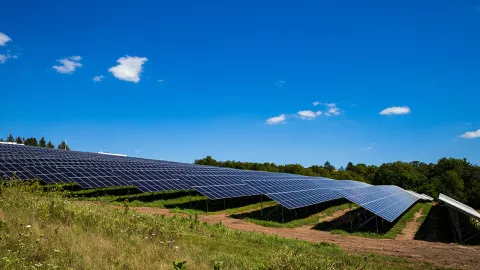
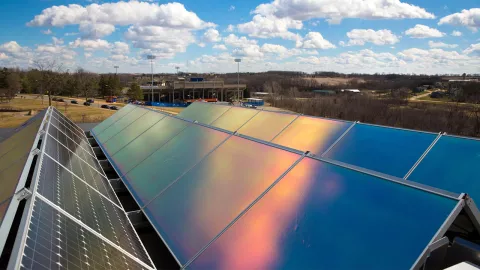
This semester marked the official start of the University of Wisconsin-Platteville’s 2.4-megawatt solar array generating energy, which continues to set UW-Platteville apart as a leader in sustainability. The solar array became active in August, and university officials say that during its first few operational months, it’s making good progress towards the institution’s sustainability goals.
“We can see that the electrical generation of the new solar array is within the parameters of its design,” said Alan Burr, the university’s sustainability coordinator.
The solar array feeds directly into the main electricity meter connected to all university buildings, generating electricity in real time, rather than sending it back to the grid. This provides the greatest financial benefit to the university.
Dr. Risper Nyairo is working to change the future of sustainability in the Platteville area, which starts in part by reconstructing the past. Nyairo, a postdoctoral scholar in the University of Wisconsin-Platteville’s Environmental Sciences and Society program, is conducting a feasibility study on the potential of linking more local producers to the university’s Dining Services, in order to increase local food offerings and promote sustainable practices within the local watershed.
The University of Wisconsin-Platteville is continuing its commitment to sustainability with the construction of its newest engineering building, Sesquicentennial Hall. Set to open this fall, it will be the university’s first building to seek certification by the U.S. Green Building Council’s internationally-recognized Leadership in Energy and Environmental Development rating system, known as LEED. To achieve LEED certification, a building project earns points based on meeting prerequisites in the areas of carbon, energy, water, waste, transportation, materials, health and indoor environmental quality.
The beekeeping season is underway, and the University of Wisconsin-Platteville Bee Squad is ready to observe honeybees and native pollinators across campus. The Bee Squad, which consists of nearly a half dozen students, is advised by Dr. Becky Doyle-Morin and Dr. Jeffrey Huebschman, both professors of biology. The club, which formed nearly five years ago, constructed the pollinator “P” on campus and the honeybee hive.
One Bee Squad member, Rachel Padour, a junior biology major from Chilton, Wisconsin, said she’s always been interested in bees, flowers and pollination. Padour explains how bees fulfill an important ecological niche.
Just in time for Earth Day, University of Wisconsin-Platteville students had the opportunity to contribute to the stewardship of campus lands – an important part of the university’s commitment to sustainability. They did so by participating in prescribed burns across Memorial Park. Prescribed burns have played a varying role in the university’s land management plan for the past several decades, helping to keep campus prairies and savannas in good health by promoting growth of native plant species while clearing invasive species.
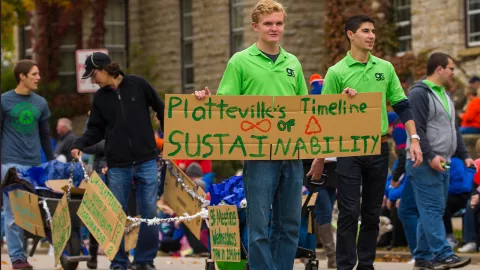
Located in the ecologically unique Driftless Region, the University of Wisconsin-Platteville has long played an important role in sustainability, both on campus and in the wider region. From the first wind turbine installed in 2011 to the 2.4 megawatt solar array installed a decade later, UW-Platteville has remained unwavering in its commitment to sustainability. See a full timeline of sustainability highlights below.
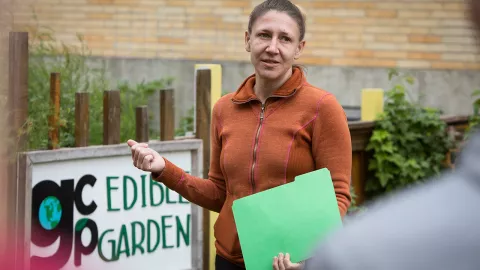
Many of today’s students – like Ryan Lodico and Megan Kaufmann – are continuing the tradition of advocating for sustainability on campus.
“I’ve been interested in sustainability for a lot of my life, but I didn’t get involved in advocacy until I came to UW-Platteville,” said Lodico, a senior engineering physics major from Moline, Illinois. He joined the student organization Renewable Revolution his freshman year and became involved in advocating for the solar array.
“History is troubling, but once you get through the anger, you can fully comprehend what you read and can move forward to fix it,” said Grace Trenkamp, a UW-Platteville senior environmental science and conservation major and social and environmental justice minor, from Preston, Iowa. “The point of history is to look back and not do it again.”
The University of Wisconsin-Platteville will receive $55,373 in support from the Freshwater Collaborative of Wisconsin this year to enhance its water-related academic programs. The funding is part of a statewide initiative, backed by the Wisconsin State Legislature and Gov. Tony Evers, to tackle 10 grand water challenges and support curriculum development, undergraduate research opportunities, career development and field training experiences for students interested in studying water-related fields at the 13 UW Schools.
Funding includes support for the following projects at UW-Platteville:
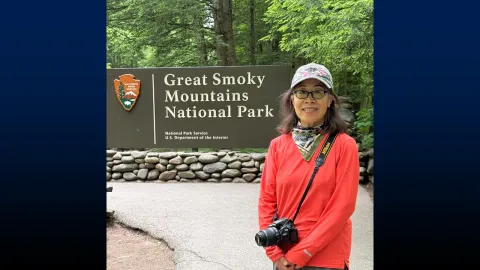
Dr. Chris Underwood, department chair and associate professor of environmental science and society at the University of Wisconsin-Platteville, is working on a project, funded by the National Park Service, to expand fire history research in Great Smoky Mountains National Park. At the conclusion of the project, the researchers will have a spatially comprehensive fire and vegetation history of the entire park that dates back to the last major North American glaciation.
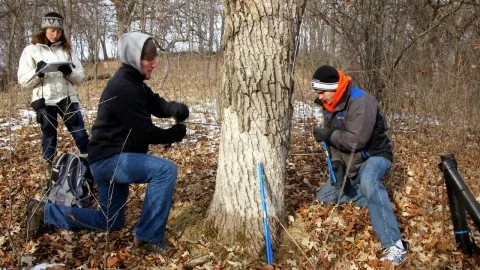
Four University of Wisconsin-Platteville students received the opportunity to conduct undergraduate research focused in the area of dendroecology, by assisting Dr. Evan Larson, professor of environmental sciences and society, with his project titled, “Groundwater Access Impacts Tree Productivity in the Central Sands of Wisconsin.” S. Blossom Ramos, John Rodwell, Grace Trenkamp and Lucas Turpin will present their findings at Research in the Rotunda, held in the state Capitol on Wednesday, March 9.
“Our research is seeking to investigate how groundwater availability influences tree growth and how that applies with resource management in the Central Sands region of Wisconsin,” said Rodwell, a junior environmental science and conservation major, from Cottage Grove, Wisconsin.
Reclamation, environment and conservation (REC) is a growing field continuing to bring professional opportunities to UW-Platteville students. The REC program is led by Dr. Christopher Baxter, Professor of soil and crop science in the School of Agriculture, who said there is great demand for employment. Through the interdisciplinary coursework and combined hands-on experience, Pioneers are finding themselves working in different facets of the industry across the country.
Dr. Evan Larson, professor of geography at the University of Wisconsin-Platteville, and his collaborators have been paddling the lakes of the Boundary Waters Canoe Area Wilderness for the past 15 years to conduct a sprawling research project. Initially focused on finding old trees to provide perspective on past climate, the work developed into a career-defining project better understanding the relationships between people and historical fire regimes with implications for fire management in the United States, the perception of wilderness and social justice around Indigenous land use practices and traditional practices. After years of building upon their research, Larson; Dr. Kurt F. Kipfmueller, associate professor of geography, environment and society at the University of Minnesota; Lane Johnson, forest research specialist at the Cloquet Forestry Center and Dr.
During the University of Wisconsin-Platteville’s recent Earth Day celebration, Chancellor Dennis J. Shields furthered the university’s commitment to being a leader in sustainability by pledging to become a zero waste campus by 2035. A zero waste campus is defined as diverting 90% of unwanted items from landfills, through recycling, composting or reusing.
The University of Wisconsin-Platteville received state approval Thursday to construct a 2.4 megawatt solar array in Memorial Park. This will be the largest solar array owned by a Wisconsin state agency and will make the university the sixth-highest on-site producer of renewable energy among higher education institutions in the nation, setting UW-Platteville apart as a leader in its commitment to renewable energy.
“We are excited to take this momentous step in our commitment to sustainability,” said Chancellor Dennis J. Shields. “These efforts will save taxpayer money and have a lasting impact on future generations of Pioneers. I am proud that UW-Platteville can serve as a model of innovation and pave the way for other state agencies to follow suit.”
I am proud that UW-Platteville can serve as a model of innovation and pave the way for other state agencies to follow suit.” –Chancellor Dennis J. Shields
Thousands of hours of field work and undergraduate research, conducted by more than 75 University of Wisconsin-Platteville students spanning seven years, has come to fruition. Dr. Chris Underwood, associate professor of geography and department chair; Dr. Evan Larson, professor of geography; and alumna Sara Allen, a 2013 history and geography graduate, co-authored “The Driftless Oaks: A new network of tree-ring chronologies to improve regional perspectives of drought in the Upper Midwest, USA.” Their paper was published this fall in the academic journal Progress in Physical Geography: Earth and Environment.
Amid a decades-long trend of declining bird populations in North America, setting land aside for preservation has long been a primary approach to protect biodiversity. Dr. Lynnette Dornak, associate professor of geography at the University of Wisconsin-Platteville, researched the effectiveness of this method, and her work, “Assessing the Efficacy of Protected and Multiple-Use Lands for Bird Conservation in the U.S.,” was recently published by the scientific journal, PLOS ONE.
The University of Wisconsin-Platteville Department of Geography is now offering a new undergraduate degree, environmental science and conservation. The program launched this fall with more than a dozen students declaring the major.
“The B.S. in environmental science and conservation is a multi-dimensional degree built upon curriculum from the natural, physical and social sciences, as well as the humanities and technology,” said Dr. Kory Wein, interim dean of the College of Liberal Arts and Education. “The College of LAE is the perfect home for such a diverse degree. This offering provides a highly desirable major that will engage our students in modern approaches to environmental stewardship and conservation and prepare them to solve environmental problems in the 21st century.”
As organizations large and small struggle to adapt to the COVID-19 pandemic, the effects on the University of Wisconsin-Platteville and its surrounding communities are far-reaching. Students are continuing their studies from remote locations, where they face new personal and academic challenges. Faculty are adapting to delivering their courses in a new way and providing support to their students from afar. Yet, even as their own lives are disrupted, university students and staff have contributed to the greater good by sharing their skills and resources whenever possible.
“I love interacting with the students, especially seeing them ‘get’ how things happening elsewhere affect them.” – James (Jim) Valiga, instructor of geography at UW-Platteville.
When James (Jim) Valiga began teaching geography classes at the University of Wisconsin-Platteville in fall 2013, his main goal was to pass on his life experience and knowledge. Each day, he strives to provide students with the knowledge, skills and support they need to succeed in their careers and be curious about the world.
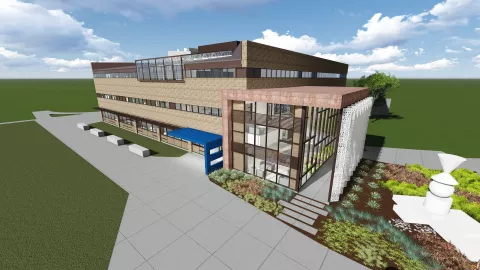
Renovations to Boebel Hall are set to begin in the upcoming weeks on the UW-Platteville campus. The $23.7 million project will renovate existing laboratory and classroom space to become instructional laboratories, preparation and support space, research and undergraduate research space and one general assignment classroom. The state-of-the-art science laboratories will serve majors from a wide range of disciplines including biology, chemistry and the newly approved environmental science and conservation bachelor of science degree program.
The State of Wisconsin designated capital building project money (not tuition dollars) for this important project, which completes first-floor renovations done in 2010.
Dr. Evan Larson, associate professor of geography at the University of Wisconsin-Platteville, two former students and three other colleagues recently co-authored an article about their tree-ring research, “Faces in the Wilderness: a New Network of Crossdated Culturally-Modified Red Pine in the Boundary Waters Canoe Area Wilderness of Northern Minnesota, USA.”
Learning from his students and watching them learn and grow are what Dr. Todd Stradford loves most about teaching. Stradford, an associate professor of geography at the University of Wisconsin-Platteville since August 1997, teaches courses in human geography, weather and climate and Asia.
Stradford grew up in a Navy family, the son of a naval captain. Being a member of a military family required frequent moves and exposure to unfamiliar cultures. Thanks to these early childhood experiences, he has always loved learning about other cultures and people and developed a taste for travel. He still has his first pair of Japanese chopsticks, which have a hand-painted baseball player on them.
“This field experience was the most influential, memorable class that I have ever taken. Being able to see and experience nature and its history in such a hands-on way was a completely new learning experience for me. A trip like this is the best educational adventure that a school could possibly offer students.”
These are the words of Taran Newton, a sophomore sustainability major at the University of Wisconsin-Platteville from Boscobel, Wisconsin, who recently travelled west with 17 other students and several faculty and staff members on a three-week geography field experience in the western United States.
University of Wisconsin-Platteville students, faculty and staff could play large roles in solving water issues in Southwest Wisconsin and beyond if a new initiative is passed.
Several UW-Platteville faculty members spoke in favor of the proposed UW System Freshwater Collaborative of Wisconsin at the Wisconsin Water Task Force public hearing Wednesday in Lancaster, Wisconsin.
The Freshwater Collaborative of Wisconsin would establish the nation’s most significant, integrated, multi-institutional higher education program serving the freshwater economy, according to UW System. A majority of the 13 comprehensive universities would be involved, each tasked with different areas of study. The program would bring 1,000 undergraduate and 400 graduate students to the system, as well as add 100 new faculty and researchers, to address important water issues.
Two University of Wisconsin-Platteville faculty members are being recognized for their innovative ideas to improve living and working environments in Wisconsin. A yearlong competition, sponsored by Foxconn Technology Group in partnership with the University of Wisconsin System, among others, invited participants to submit innovative ideas that enhance quality of life, improve working environments, expand transportation networks, inspire creative city planning and promote sustainable energy solutions. After narrowing down an initial 325 participants, officials recently announced the top 12 final winners, which include Dr. Hanwan Jiang, assistant professor in the Department of Civil and Environmental Engineering, and Dr. Fang Yang, assistant professor of electrical engineering in the UW-Platteville Engineering Partnerships Program.
Five University of Wisconsin-Platteville geography students and faculty members recently presented their research at the American Association of Geographers annual conference April 3-7 in Washington, D.C. The conference featured more than 6,900 presentations, posters, workshops and field trips by leading scholars, experts and researchers in the field. More than 8,500 geographers from 62 countries attended.
The UW-Platteville cohort was led by Dr. Chris Underwood, assistant professor of geography, and Dr. Evan Larson, associate professor of geography. Both are also research associates in the university’s Tree-Ring, Earth, and Environmental Sciences Laboratory.
Paul Arellano spent last summer and fall as a student at the University of Wisconsin-Platteville Baraboo Sauk County, taking surface water samples from six points along the Little Baraboo River. That’s not one of the major tributaries of the Wisconsin River, but it is its second-largest source of contaminants like phosphorus and nitrates. Since surface water quality impacts not only the aquatic ecosystem and the local water supply, but also agriculture and tourism, “it’s important to maintain and preserve the quality of our streams,” said Arellano, from Muscoda, Wisconsin.
Arellano, who now studies at UW-Platteville, will share his findings with legislators, state leaders, alumni and the public at the 16th annual Research in the Rotunda event in the state capitol in Madison, Wisconsin on Wednesday, April 17. He hopes it can help connect agriculture practices with their impact on the river’s surface water quality.
Two University of Wisconsin-Platteville students are contributing to research on the properties of bentonite, a naturally-occurring clay that is used in the construction of waste barriers. Next month, they will present their findings at the annual Research in the Rotunda event in Madison, Wisconsin, where they hope to inform legislators and other state leaders about the critical impacts their research can have on environmental protection.
What is wilderness?
To help answer this question, the University of Wisconsin-Platteville’s College of Liberal Arts and Education will host a faculty forum, “Reconsidering Wilderness,” on Thursday, March 7, in Room 136 Doudna Hall from 5-6:30 p.m. The forum will address issues related to the impact of historical Ojibwe landuse on the modern forests of the Boundary Waters Canoe Area Wilderness, a 1,000,000-acre, natural landscape of rivers, lakes and forests in northeast Minnesota, and how our ideas of wilderness are shaping the ecological fate of entire plant communities in northern Wisconsin and the Great Lakes Region.
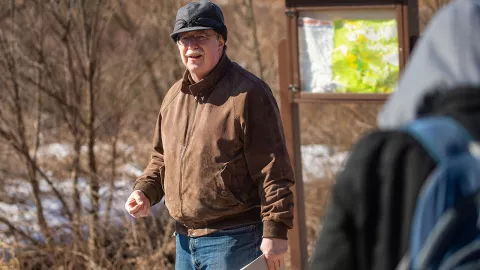
University of Wisconsin-Platteville student Eva Birtell’s research on agricultural production systems is – literally – out of this world. The junior environmental horticulture and biology major from Oostburg, Wisconsin, is part of a team of students that placed in the top five in a NASA-sponsored challenge to propose greenhouse concepts for Mars. Birtell joined the challenge after recently completing an internship at NASA, where she contributed to research on agricultural production on the International Space Station.