Dairy Innovation Hub

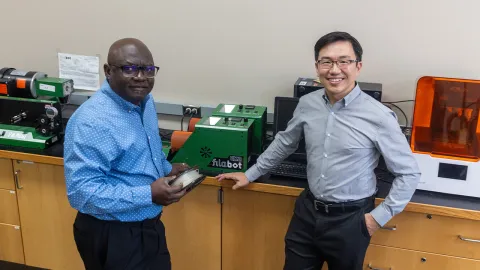
In an unexpected yet brilliant twist on recycling and innovation, two University of Wisconsin-Platteville professors have found a way to turn dairy waste into a key ingredient for eco-friendly 3D printing. A newly approved patent, titled “Development of Bio-Composite Materials for 3D Printing Using Milk Proteins,” has opened the door for spoiled milk to reduce the environmental footprint of 3D printing materials—and pour milk money into the pockets of Wisconsin dairy farmers.

“Who would have thought 3D printing and dairy protein could be combined to create a new material?” quipped Dr. Joseph Wu, associate professor of chemistry. “My hope is that it will help both the 3D printing industry and dairy farmers in Wisconsin.” 

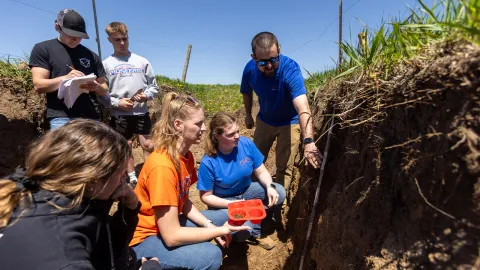
The Freshwater Collaborative of Wisconsin has committed to investing more than $4.2 million in funding for the current biennium (FY26 and FY27) to support water education and water research programs that will bolster Wisconsin’s water workforce for years to come. The University of Wisconsin-Platteville is taking part in a project that aligns with that mission by giving its students a transformative experience in the classroom and the field. 

The 19 new projects involve faculty, staff and students from all 13 Universities of Wisconsin as well as dozens of partners from industry, government, local communities, tribal nations, nonprofits and K-12 education. They will increase research and training opportunities for high school, undergraduate and graduate students and will address Wisconsin’s biggest water challenges, including PFAS and phosphorus pollution. 

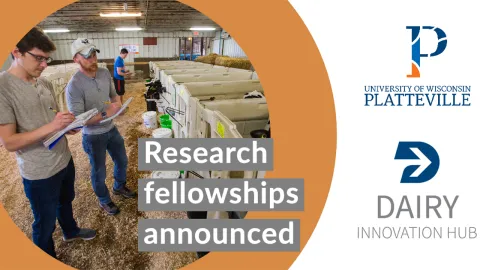
The University of Wisconsin-Platteville recently awarded six faculty research fellowships to increase dairy-related research capacity through the Dairy Innovation Hub initiative. Known as the Dairy Industry Impact Innovation Faculty Fellowships, or “DI3 Faculty Fellowships,” the selected faculty members will tackle research projects in the Hub’s four priority areas: stewarding land and water resources; enriching human health and nutrition; ensuring animal health and welfare and growing farm business and communities. 

Funded through a $7.8 million per year investment by the state of Wisconsin, the Hub harnesses research and development at UW-Platteville, UW-Madison and UW-River Falls campuses to keep Wisconsin’s $52.8 billion dairy community at the global forefront in producing nutritious dairy foods in an economically, environmentally and socially sustainable manner. Since its launch in 2019, the Hub has funded more than 230 projects across the three campuses. 

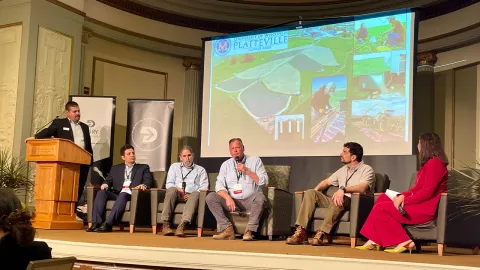
Dairy Soil & Water Regeneration (DSWR) leaders and researchers delved into the challenges and opportunities of the broad data-driven project during a panel discussion May 14 in Madison. 

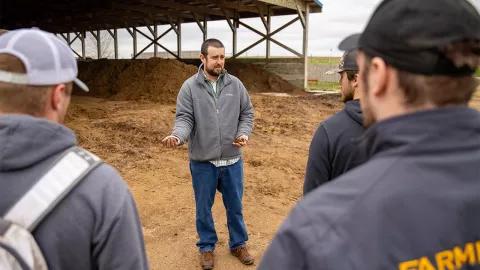
Dennis Busch, senior scientist at the University of Wisconsin-Platteville’s Pioneer Farm, was featured in the main-stage discussion at the Dairy Symposium, an academic-focused event held by the Dairy Innovation Hub, which is a state-funded effort to support Wisconsin’s dairy community in part by advancing science at the state’s three universities with agriculture programs: UW-Platteville, UW-Madison and UW-River Falls. 

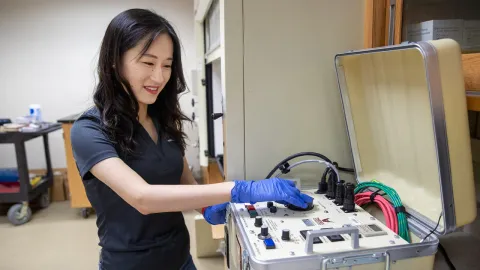
At the crossroads of food science, agriculture and sustainability, groundbreaking research is transforming the future of the dairy industry. Dr. Zifan Wan, an assistant professor of Animal, Dairy and Veterinary Sciences at the University of Wisconsin-Platteville, is establishing a research program that leverages cold plasma technology to advance food safety, sustainable agriculture and dairy processing. With support from the Dairy Innovation Hub, she is developing innovative, chemical-free solutions that improve food sanitation, boost crop yields and promote a more sustainable agricultural system. 

Choosing UW-Platteville to build a research program 

The Dairy Innovation Hub will host an informational research poster session at the State Capitol March 26 to highlight select projects funded by the initiative at UW–Platteville, UW–Madison and UW–River Falls.

Attendees are invited to browse a dozen research posters and engage with students and faculty affiliated with Hub-funded projects. Legislators, staff and the public are encouraged to participate.

Dr. Zifan Wan, assistant professor of Animal, Dairy and Veterinary Sciences in the UW-Platteville School of Agriculture will address enriching human health and nutrition with the utilization of the novel atmospheric cold plasma technology for controlling Listeria monocytogenes in cheese brine. 

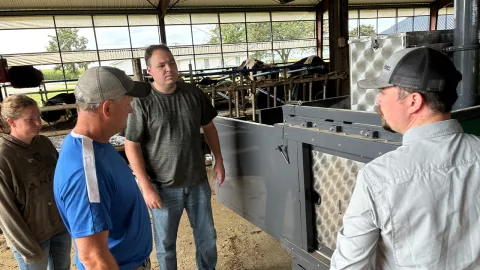
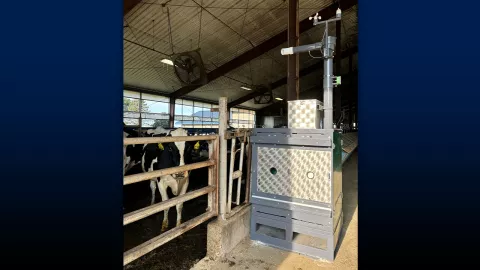
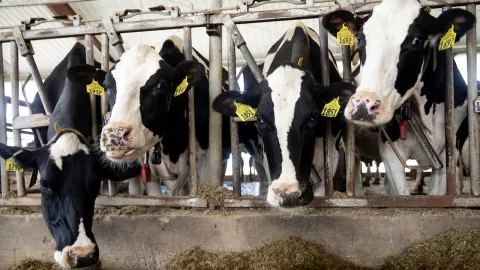
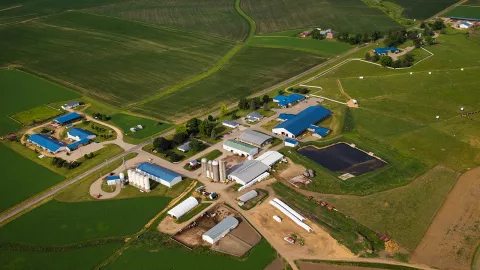
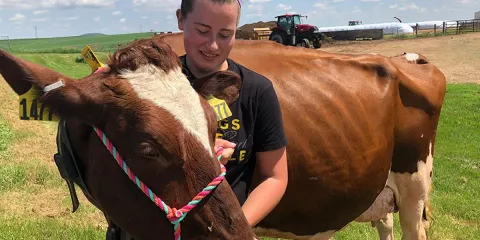
The University of Wisconsin-Platteville's Pioneer Farm is leading the way in agricultural innovation with the introduction of the GreenFeed machine, a groundbreaking technology in livestock emissions research. The machine, designed to analyze cow burps, helps combat global warming by providing critical data on methane emissions from dairy farms, enabling farmers to optimize feed and reduce the environmental impact of livestock.

“The GreenFeed machine offers a unique opportunity to directly measure the microbial activity within the cow's digestive system,” said Dr. Ryan Pralle, assistant professor of animal, dairy and veterinary sciences at UW-Platteville’s School of Agriculture. “This capability not only aids in improving cattle nutrition but also contributes to more sustainable farming practices by monitoring and potentially reducing methane emissions.”

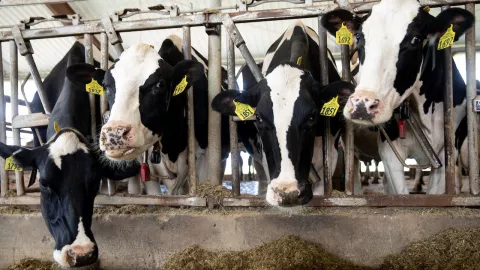
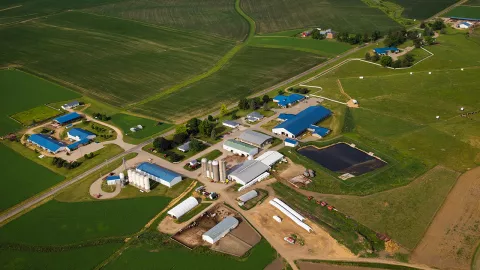
The University of Wisconsin-Platteville’s Pioneer Farm, which honors agricultural tradition within its School of Agriculture, is also at the forefront of innovation. With the recent integration of two cutting-edge systems—one that measures cow burps and another that monitors individual feed consumption—Pioneer Farm is setting a new standard in precision herd management. These advancements not only enhance cattle well-being but also generate data that drives sustainability and efficiency in the global dairy industry, distinguishing UW-Platteville’s School of Agriculture as a leader in the tri-state area.

The University of Wisconsin-Platteville recently awarded five faculty research fellowships to increase dairy-related research capacity through the Dairy Innovation Hub initiative. Known as the Dairy Industry Impact Innovation Faculty Fellowships, or “DI3 faculty fellowships”, the selected faculty members will tackle research projects in the Hub’s four priority areas; stewarding land and water resources; enriching human health and nutrition; ensuring animal health and welfare; and growing farm business and communities.

Funded through a $7.8 million per year investment by the state of Wisconsin, the Hub harnesses research and development at UW-Madison, UW-Platteville and UW-River Falls campuses to keep Wisconsin’s $45.6 billion dairy community at the global forefront in producing nutritious dairy foods in an economically, environmentally, and socially sustainable manner. Since its launch in 2019, the Hub has funded more than 230 projects across the three campuses.

The University of Wisconsin-Platteville recently awarded five faculty research fellowships to help increase dairy-related research capacity through the Dairy Innovation Hub initiative. Known as the Dairy Industry Impact Innovation Faculty Fellowships, or “DI3 faculty fellowships,” the selected faculty members will tackle research projects in the Hub’s four priority areas; stewarding land and water resources; enriching human health and nutrition; ensuring animal health and welfare; and growing farm business and communities.

Funded through a $7.8 million per year investment by the state of Wisconsin, the Hub harnesses research and development at UW-Madison, UW-Platteville and UW-River Falls campuses to keep Wisconsin’s $45.6 billion dairy community at the global forefront in producing nutritious dairy foods in an economically, environmentally and socially sustainable manner. Since its launch in 2019, the Hub has funded more than 160 projects across the three campuses.

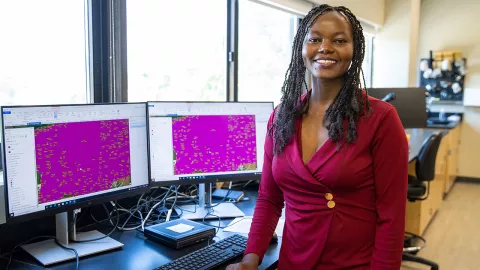
Dr. Risper Nyairo is working to change the future of sustainability in the Platteville area, which starts in part by reconstructing the past. Nyairo, a postdoctoral scholar in the University of Wisconsin-Platteville’s Environmental Sciences and Society program, is conducting a feasibility study on the potential of linking more local producers to the university’s Dining Services, in order to increase local food offerings and promote sustainable practices within the local watershed. 

The University of Wisconsin-Platteville recently awarded five faculty research fellowships to help increase dairy-related research capacity through the Dairy Innovation Hub initiative. Known as the Dairy Industry Impact Innovation Faculty Fellowships, or “DI3 faculty fellowships,” selected faculty members will tackle research projects in the Hub’s four priority areas: stewarding land and water resources; enriching human health and nutrition; ensuring animal health and welfare; and growing farm business and communities.

The Dairy Innovation Hub, which launched in 2019, harnesses research and development at UW-Madison, UW-Platteville and UW-River Falls campuses to keep Wisconsin’s dairy community at the global forefront in producing nutritious dairy products in an economically, environmentally, and socially sustainable manner. It is supported by a $7.8 million annual investment by the state of Wisconsin.

The University of Wisconsin-Platteville recently awarded six faculty research fellowships to help increase dairy-related research capacity through the Dairy Innovation Hub initiative. Known as the Dairy industry – impact and innovation - faculty fellowships or “DI3 faculty fellowships,” selected faculty members will tackle research projects in the Hub’s four priority areas: stewarding land and water resources; enriching human health and nutrition; ensuring animal health and welfare; and growing farm business and communities.

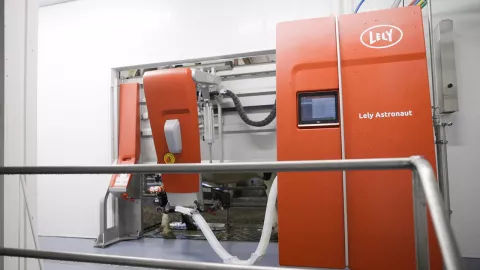
University of Wisconsin-Platteville’s Pioneer Farm is now home to two new state-of-the-art robotic milkers, enabling more opportunities for research and engagement across campus and the tri-state region. Funded through the Dairy Innovation Hub, the two Lely A5 Astronaut robotic milkers were installed earlier this month and introduced to the nearly 200-cow herd at Pioneer Farm this week. UW-Platteville is currently the only UW System school to operate robotic milkers. 

The University of Wisconsin-Platteville is one step closer to launching the new Dairy Pilot Plant, thanks to a recent $10,000 grant from Compeer Financial. The proposed plant, which will be located at Pioneer Farm, will provide research and education on dairy food product development while also giving students an opportunity to learn about rural economic development, entrepreneurship and sustainability. The Dairy Pilot Plant will also be integrated into system level research on feed efficiency, energy usage and water usage.

The investment from Compeer Financial’s Fund for Rural America was the catalyst that helped garner additional funding required to secure an architect engineering firm to bring the vision of the Dairy Pilot Plant to life.

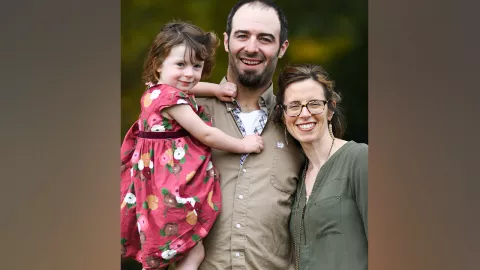
When you think of a family farm, you might think of parents passing land onto their children. But for TJ and Katie Roth, “family” isn’t defined by blood alone.

After enrolling at UW-Platteville in 2007 to pursue his degree in animal science with a dairy emphasis, TJ picked up a part-time job with John and LuAnn Shea, eventually working his way up to farm manager. Over time, the Sheas became like a second family to TJ, and to Katie when the couple started dating in 2014. Both earned their place on the farm and in 2015; the Roths joined the Sheas as partners in Banner Ridge Farms LLC.

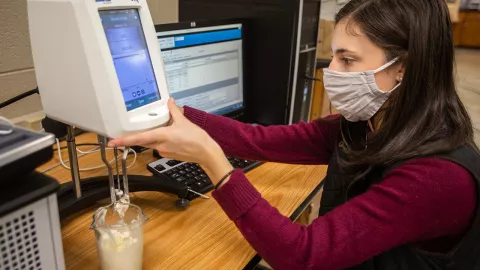
Wisconsin is known worldwide for its dairy products, and ice cream is an almost universal favorite. Yet what we love about it can often be hard to describe. Now, mechanical engineering professors Dr. Thomas Zolper and Dr. Bidhan Roy are looking at the science behind one of the world’s most popular treats as part of their research for the UW-Platteville Dairy Innovation Hub.

Throughout his career, Ryan Weigel has felt the influence of UW-Platteville. From the time he graduated as an animal science major, to his own role as an educator today, Weigel acknowledges the friends, family and mentors that have helped him along the way.

Early in his career, a recommendation from Jeff Dornink, who at the time was the manager of Pioneer Farm, helped him secure a job he loved with Bou Matic, a dairy equipment manufacturer out of Madison, Wisconsin. For several years, Weigel had the opportunity to travel the world as a product specialist for the company, covering much of North America and New Zealand. Later, when he was looking for a new opportunity, it was Dr. Michael Mee who gave him a lead that would change his life.

The Dairy Innovation Hub has released its first annual report that reflects progress and activities from initial funding approval by the Wisconsin Legislature in early October 2019 through June 2020.

The report outlines the major accomplishments of the Hub, both since its inception and during the preceding fiscal year.

Read and download the report from the Hub website.

“In a time of great uncertainty and extremely unusual operating conditions throughout the dairy community, and on all three campuses, we are pleased with our progress, having met or exceeded all internal timelines for project decisions for our current fiscal year, as well as plans for year two,” said Dr. Heather White, an associate professor in the UW–Madison Department of Animal and Dairy Sciences and faculty director of the Hub.

Highlights of the report include:

Dear Friends,

We’re excited to communicate some of the many happenings in relation to the Dairy Innovation Hub at UW-Platteville. It has been less than a year since funding approval and allocation and much has been accomplished. Although this is a UW-Platteville perspective, from the beginning, a key component of Hub activities and success has been collaboration including extensive collaboration across the three Hub UW-System universities (UW-Platteville, UW-River Falls and UW-Madison) along with industry stakeholders. The glue that has helped ensure collaboration and communication are the faculty director Dr. Heather White and program manager Maria Woldt. Their engagement and work have been exemplary. To learn more about Hub activities as a whole, please refer to the updates in this newsletter.

Ryan Pralle and Joseph Sanford have been hired as faculty members by the UW-Platteville School of Agriculture, representing the first tenure-track faculty positions funded by the Dairy Innovation Hub. Both positions are 70% research and outreach and 30% teaching.

The Dairy Innovation Hub, which the state of Wisconsin is supporting with $7.8 million per year, harnesses research and development at UW-Madison, UW-Platteville and UW-River Falls campuses to keep Wisconsin’s $45.6 billion dairy community at the global forefront in producing nutritious dairy products in an economically, environmentally and socially sustainable manner.

Pralle and Sanford will start in August.

The University of Wisconsin­-Platteville recently awarded seven faculty research fellowships to help increase dairy-related research capacity through the Dairy Innovation Hub initiative. Known as the Dairy industry – impact and innovation – faculty fellowships or “DI3 faculty fellowships,” selected faculty members will tackle research projects in the Hub’s four priority areas: stewarding land and water resources; enriching human health and nutrition; ensuring animal health and welfare; and growing farm business and communities.

The Dairy Innovation Hub, which the state of Wisconsin is supporting to the tune of $1 million this year and $7.8 million per year in subsequent years, harnesses research and development at UW-Madison, UW-Platteville and UW-River Falls campuses to keep Wisconsin’s $45.6 billion dairy community at the global forefront in producing nutritious dairy products in an economically, environmentally and socially sustainable manner.

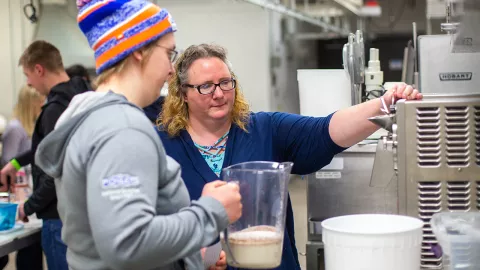
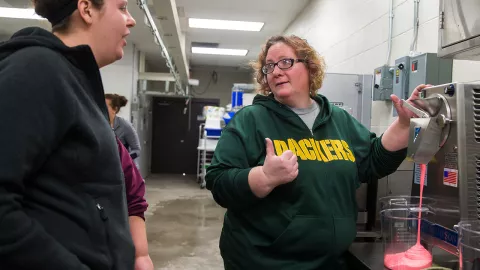
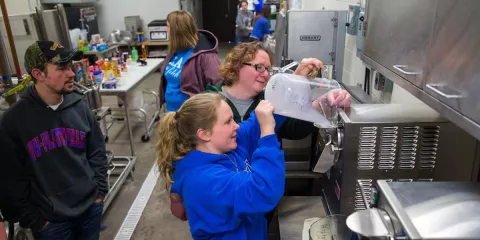
Ice cream will soon be the next product made and sold by students on the University of Wisconsin-Platteville campus. A recent grant from the Compeer Financial Fund for Rural America will support the opening of UW-Platteville’s Dairy Pilot Plant and the creation of a student-run ice cream production business.

Dr. Tera Montgomery, professor in UW-Platteville’s School of Agriculture, has been making ice cream with students in her Dairy Products class for several years, but only on a small scale, occasionally receiving conditional permits to serve it at events.

“The more we make it, the more people say how awesome it is and that we should look into making and selling it here,” she said.

From improving human nutrition to assuring clean water to growing the farm economy while caring for animals, the Dairy Innovation Hub will harness the intellectual and creative power of three University of Wisconsin institutions to address the most complex challenges facing the state’s dairy industry.
The proposed Dairy Innovation Hub bill moved two steps closer to reality this week when the Wisconsin Assembly and Senate both passed the proposal that the Wisconsin Joint Committee on Finance originally recommended in the 2019-21 state budget. The budget now goes before Gov. Tony Evers.

The original bill provides $7.9 million annually to UW System to increase offerings at UW-Platteville, UW-Madison and UW-River Falls. More than $1.8 million of that would fund approximately four UW-Platteville Dairy Science faculty positions, research opportunities and equipment in the Russell Hall laboratories and at Pioneer Farm. The JFC recommended $8.8 million for the next two years.

The UW Dairy Innovation Hub was approved in the new state budget. The University of Wisconsin-Platteville dairy program would grow significantly under a proposed University of Wisconsin Dairy Innovation Hub bill introduced this week to the state legislature.

The bill provides $7.9 million annually to UW System to increase offerings at UW-Platteville, UW-Madison and UW-River Falls. More than $1.8 million of that would fund approximately four UW-Platteville Dairy Science faculty positions, research opportunities and equipment in the Russell Hall laboratories and at Pioneer Farm.

The proposal, authored in part by local representatives Sen. Howard Marklein (R-Spring Green), Rep. Travis Tranel (R-Cuba City) and Rep. Todd Novak (R-Dodgeville) among others, calls for disciplines in four areas: