
Pour'n Pioneers star in new series tracking national 'Cast in Steel' competition
Sean McCarthy joined the University of Wisconsin-Platteville's metal casting club hoping to gain extra experience he could parlay into a manufacturing job. He got it, and then some.
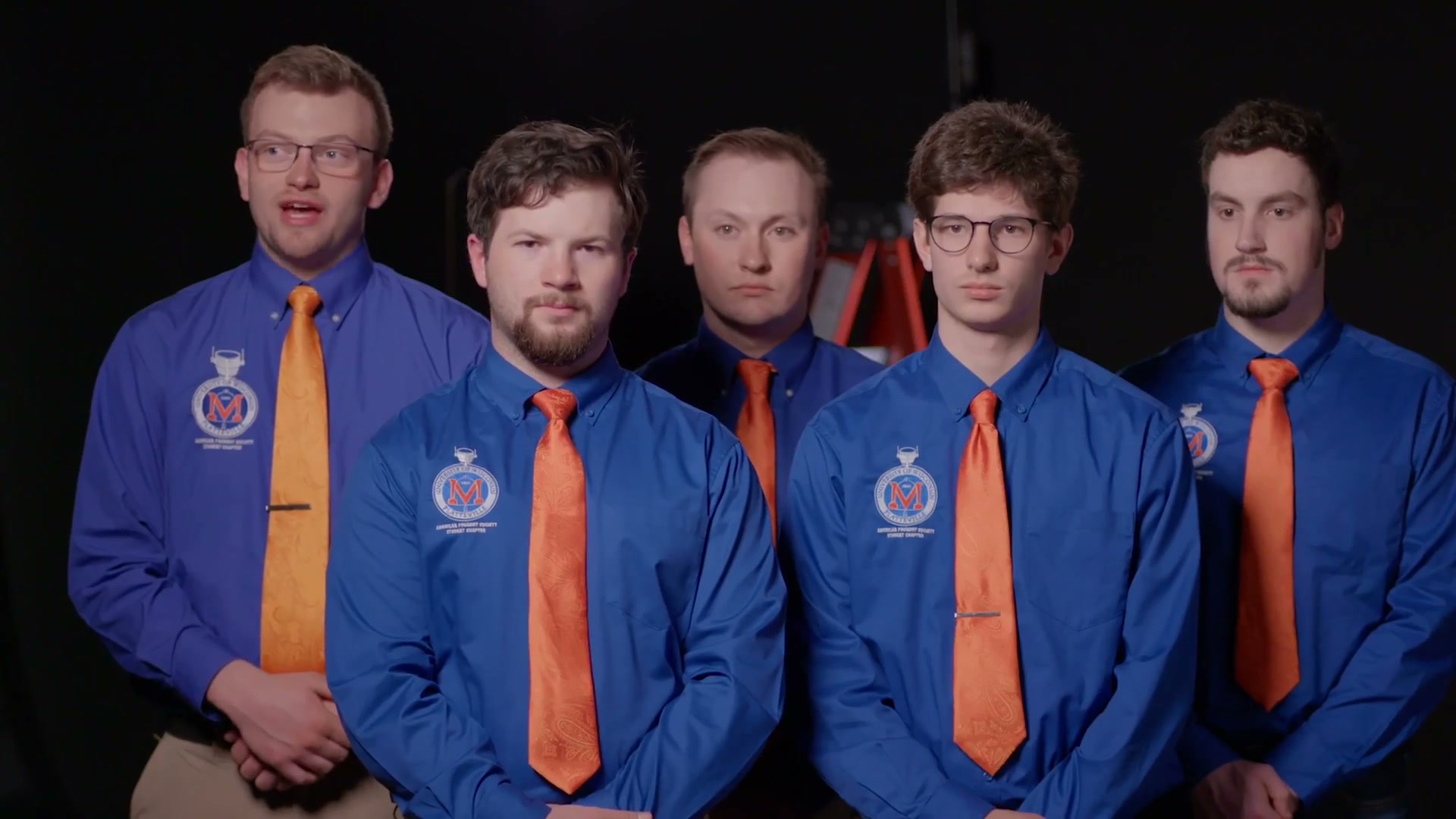
McCarthy was part of the five-member Pour'n Pioneers club team that produced a replica of one of George Washington's swords that was so strong and historically accurate that it earned the club a second-place finish in the 2025 Cast in Steel competition, beating out dozens of other schools from around the country. The team's performance will be featured in a new You Tube series documenting the 2025 competition. The series debuts Thursday evening on the Cast in Steel channel, with the Pour'n Pioneers set to star in Episode 3 on July 23.
"(Pour'n Pioneers) gives you the resources to get yourself out there," said McCarthy, who graduated just weeks after the competition with a degree in applied engineering technology and a minor in metals processing technology. He's now putting his skills to use casting boat propellors for Mercury Marine in Fond du Lac. "It has a lot of pay off."
The club has dominated the Cast in Steel competition since it began in 2019. Launched by the Steel Founders Society of America and subsidized by the U.S. Department of Defense, the competition challenges students from 38 schools to design and forge implements and weapons and then test the products in front of a panel of judges. The overall winner takes home $25,000.
The Pour'n Pioneers won the competition in 2022 and took second in 2023 before taking second overall last year. This past spring the team was one of eight finalists in a fight to create a replica of a 14th-century battle axe.
The new You Tube series will focus on the 2025 competition, which tasked teams with creating a replica of one of George Washington's presentation broadswords. Design work on UW-Platteville's sword began during the fall of 2025; McCarthy said the first challenge was simply coordinating the team's schedule -- the squad included Connor Buchanan, Mitchell Haintstock and Henry Weeger as well as McCarthy -- and getting everyone to the Russel Hall foundry to work on the sword at the same time took some doing.
"It required all hours of the night," he said. "You have winter break, spring break, and the deadline for shipping the sword was just after spring break. Mind you, this isn't a class. This is one of the clubs, all time volunteered outside of class. It takes a special group to come together at those really odd hours."
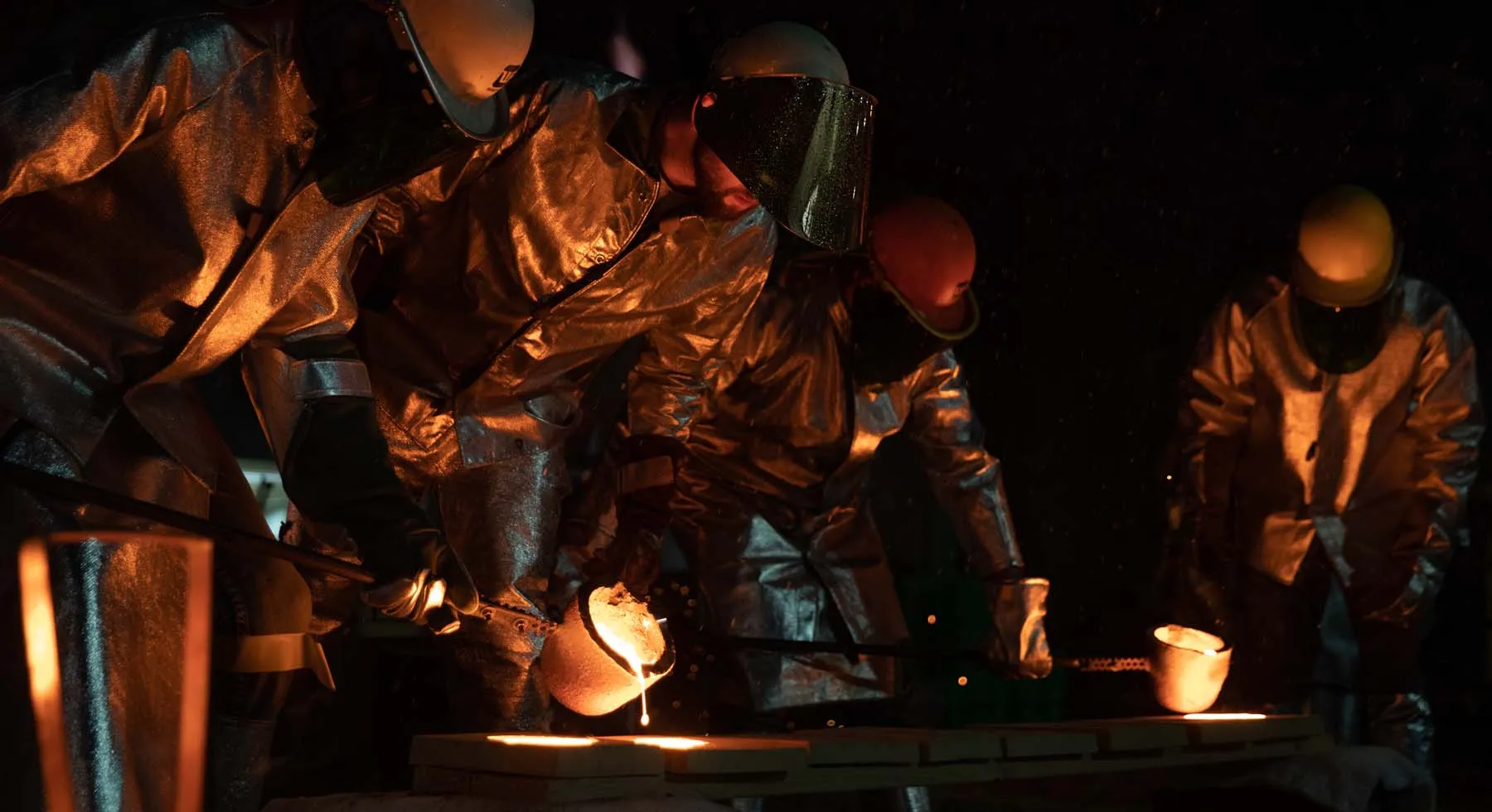
And designing the sword itself wasn't easy. The saber had to be long, narrow and thin but still strong. The team eventually casted the saber in layers of ceramic, McCarthy said. Having a foundry on campus made all the difference, he said.
"It's one thing to visit a place and pour a casting and see it, but to go from start to finish, learn all the trouble-shooting, know all the variables you'd never know otherwise unless you're the one pouring the casting, we would never have learned those lessons and gained the experience we can take to our jobs in the future."
The competition ran three days in Atlanta, Georgia, in April last year. The Pour'n Pioneers found themselves battling with some heavy hitters, including UW-Madison, UW-Milwaukee, Ohio State, Virginia Tech and Purdue. The competition culminated in a series of high-stake stress tests ranging hacking a cherry dowel rod in two to slicing off chunks of an ice block.
"We were seeing dozens of schools' swords snap into pieces and bend," McCarthy said. "It was definitely building up the pressure. There's a lot more tension in your shoulders, having to put a lot more faith in our sword."
The sword finally bent during one of the ice block chops. But it performed well enough to earn the overall runner-up spot behind Youngstown State University and capture top honors in the best authenticity and best design categories.
"It feels really good in your hand. it's a light, fast, very flexible blade," Judge David Baker said. "As a sword maker, that's what I want to see ... all in all, it's a fabulous sword."
Th 2026 competition required teams to build a replica of the battle axe Scottish King Robert the Bruce wielded at the Battle of Bannockburn in the year 1314. UW-Madison took first; this year's Pour'n Pioneers -- Zachary Johnson, Jackson Loga, John Michael Fisher, Danny Borkowski and Thomas Schumacher -- made the finals but did not place in the top three.
Regardless, Chris Carlson, chair of the UW-Platteville Department of Applied Engineering and Technology Management, praised his department's instructors for enabling Pour'n Pioneers to compete with schools like Ohio State and Virginia Tech. But in the end the competition forces students to confront real-world design and manufacturing problems in a high-pressure situation, skills they'll take with them for the rest of their careers.
"They have to overcome all the adversity of doing something for real," Carlson said. "Those skills are 100 percent transferable. If you're going through the processes here, the same skill sets of trouble-shooting, design, all transfer into the real world as real projects. They'll always be able to look back on and pull from their mistakes and successes."
Sean McCarthy is a case in point. He uses the skills he learned forging the sword at UW-Platteville building propellers for Mercury Marine.
"It was very much directly correlated to what I do now," he said. "(The work) requires a lot of knowledge I otherwise wouldn't have gained. It opened my eyes to something I didn't know at first. The payoff is well worth it."